


Warehouse Forklift
A warehouse forklift is a powered industrial truck used for lifting and transporting materials and goods within a warehouse or other industrial setting. They are typically used to move pallets, crates, and other heavy items over short distances, and are a common sight in factories, distribution centers, and other large industrial facilities. Warehouse forklifts come in a range of sizes and styles to suit different applications, including stand-up and sit-down models, electric and propane-powered machines, and models designed for narrow aisles or outdoor use.
Advantages of Warehouse Forklift
Lifting heavy objects: Forklifts allow operators to safely lift heavy loads. It would normally take multiple employees to transport inventory, but a single operator can manage larger loads, which means you can accomplish more tasks in a shorter period of time with less manpower. .
Increase productivity: Many forklift models allow the operator to load and unload machinery without leaving the forklift. By being able to move more material at once and cover greater distances in your warehouse in less time, you can start taking on larger loads and meet deadlines faster.
Flexibility: Forklifts allow you to complete multiple flexible tasks more efficiently, so you can choose a multi-purpose forklift model that will help you complete a range of different tasks.
Maximize your warehouse space: Forklifts enable businesses operating in cramped warehouse environments to store more inventory and better utilize their space. Forklifts allow operators to stack goods vertically, maximizing warehouse space.
Reduce labor costs: Forklifts allow workers to cover more ground in less time. Being able to transport heavier goods faster will allow business owners to save on the payroll costs of having multiple employees complete a task.
Improve security: Cables and pulleys were previously relied upon to lift heavy objects, and many workers ended up injured or overworked. Forklifts are designed to cause minimal harm to workers, and if safety protocols are followed correctly, forklifts should help you create a safe warehouse environment.
Environmentally friendly: Modern electric forklifts do not emit any CO2 gas, making the vehicles the most environmentally friendly machines.
Less impact from noise: If people are working in a smaller area, they must ensure that the workplace is noise-free. Forklifts always ensure reduced noise impact and provide a peaceful atmosphere for employees.
-
 2 Ton Electric Warehouse Pallet Handling ForkliftModel:PBS20. Name:2 ton pallet handling forklift. Load capacity:2000KG. Lift Height:200mm.Add to Inquiry
 -
 2.5 Ton Multi-Directional Omni-way Electric Reach StackerModel:MQ25. Name:2.5 ton four-way and omni-way electric forklift reach stacker. Load capacity:2500KG. Lift Height:3000mm. Load center:500mmAdd to Inquiry
 -
 1.6 Ton Front Wheel Drive 3-Wheel Electric ForkliftModel:FB3D16N. Name:Three wheel electric forklift . Load capacity:1600KG. Lift Height:3000mmAdd to Inquiry
 -
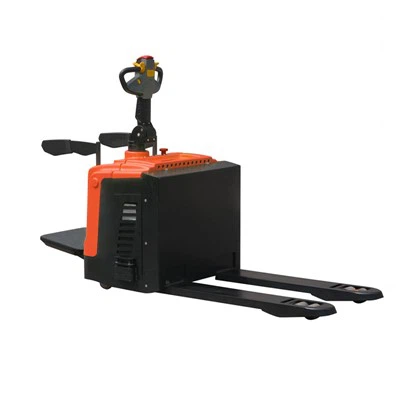 2 Ton Heavy Duty Electric Pallet Stacker ForkliftModel:SL20. Name:2 ton electric pallet handling forklift. Load capacity:2000KG. Lift Height:200mm.Add to Inquiry
 -
 1.5 Ton Mini Walkie Electric Pallet JackModel:PB15. Name:1.5 ton walking pallet handling forklift. Load capacity:1500KG. Lift Height:200mm.Add to Inquiry
 -
 2 Ton Electric Sit-Down Moving Mast Reach TruckModel:PBT20. Name:2 ton stand on stacker forklift. Load capacity:2000KG. Lift Height:3000mm. Load center:600mmAdd to Inquiry
 -
 1.6 Ton Mini Stand-on Electric Reach StackerModel:RBS20. Name:2 ton stand on reach stacker forklift. Load capacity:2000KG. Lift Height:3000mm. Load center:500mmAdd to Inquiry
 -
 2 Ton Stand-up Electric Reach Stacker Forklift√ Model:MF20. √ Name:2 Ton Narrow tunnel forklift truck. √ Load capacity:2000KG. √ Lift Height:3000mm. √ Load center:500mm√ Custom sizes and colors√ Small order accepted√ Highly accurate process√Add to Inquiry
 -
 1.5 Ton Narrow Aisle Electric Stacker ForkliftModel:MCA15. Name:1.5 Ton Narrow tunnel forklift truck. Load capacity:1500KG. Lift Height:4500mm. Load center:600mmAdd to Inquiry
 -
 Warehouse Electric Reach Forklift TruckProducts Description Ergonomic design of integrated instrument console, more comfortable operation, wide field of view frame design more open field of view. The rear wheel motor is used to drive, andAdd to Inquiry
 -
 1.6 Ton Narrow Aisle Order Picker ForkliftThe rated load is 1.6 tons, the main lifting height is 4.5-11.2m, and the auxiliary lifting is 1.7m; The body does not need to turn, and the cargo stacking and loading on both sides of the roadwayAdd to Inquiry
 -
 Narrow Aisle Side-Loading Electric Stacker ForkliftLifting height 4.5-12m; Forklift does not need to turn, through the fork rotation, side movement to achieve both sides of the goods stacking and picking up, used in narrow tunnel storage stacking.Add to Inquiry



- Tel: +86-571-86960886
- Email: info@nuoshington.com
- Add: No. 100, No. 18 Street, Hangzhou Economic And Technological Development Zone, Zhejiang Province, China
Warehouse forklift adaptability and versatility
Forklifts are adaptable, versatile pieces of equipment, making them ideal for a wide variety of uses. Whether you need to move pallets, stack boxes, or lift heavy machinery, a warehouse forklift is the ideal solution. Additionally, Warehouse forklifts come with a range of attachments, such as clamps, forks, and hooks, making them even more versatile and allowing operators to complete a range of tasks with a single piece of equipment.
Why Choose Us
Competitive prices
Our prices are highly competitive, making our products affordable for a wide range of customers.
Wide range of products
We offer a broad range of products from different categories, making it a one-stop-shop for customers. From electronics to home essentials, we have it all.
Exceptional customer service
Our customer service team is available to assist customers with any inquiries or issues they may have. We strive to provide excellent service to ensure customer satisfaction.
Quality products
We only sell high-quality products, ensuring that our customers get value for their money. We also have a strict quality control process to ensure that all our products meet the required standards.
Types of Warehouse Forklift

warehouse forklift
This is the type of forklift you are most familiar with and have seen the most. The forklift features large twin forks at the front of the vehicle, allowing it to load and move large quantities of goods throughout the warehouse.

Counterbalanced forklift
Most warehouse forklifts are counterweight variations designed specifically for this type of location. A counterweight at the rear of the vehicle will offset the heavier load lifted by the hydraulic piston and fork.

Side loading forklift
Another type of forklift commonly found in warehouses is a side loader, which works similarly to traditional models, but the forklift is located on the side of the truck instead of in front. While outdoor models will feature an enclosed cab for the operator, side loaders for indoor use will allow users to stand.

Walking pallet truck
These are also used in warehouses, but on a much smaller scale. Often called a manual pallet truck, it is used by a single operator and can transfer pallets with the two forks on the front.
Application of Warehouse Forklift
Replenishing shelves
Orklifts can be used to quickly and easily restock shelves with products, saving time and reducing labour costs.
Handling pallets
Forklifts can safely handle and move pallets, allowing for efficient storage and transportation of goods.
Moving heavy objects
Due to its strong and durable build, a forklift is ideal for moving large and heavy objects without putting too much strain on employees.
Storing materials
Warehouse forklifts can be used to move and store goods and materials within the warehouse. They are able to lift heavy loads and place them in high shelves, thereby saving valuable floor space.
Process of Warehouse Forklift
It is important to have a regular inspection schedule and to follow manufacturer recommendations for maintenance and repairs. Daily inspections should also be performed by operators to ensure that the forklift is safe to use each time it is used.
The forklift operator ensures that the load is stable and secure before moving it. They also make sure that the weight of the load is evenly distributed on the forks to prevent any accidents or damage to the items being moved. Proper loading is essential to ensure efficient and safe movement of materials within the warehouse.
Once loaded, the forklift can then be used to transport the items to their destination within the warehouse. This requires the forklift operator to carefully navigate through the warehouse, avoiding obstacles and other hazards.
The forklift operator must ensure that the load is properly secured and balanced on the forks before lifting it off the truck. They must also make sure that there is enough clearance to safely maneuver the load to its final destination.
As soon as the goods have been offloaded, the forklift operator can safely drive the forklift back to its designated location for reloading or to keep it ready for the next usage. It is important to properly park and secure the forklift to prevent any accidents or damages while it is not in use.
Components Of Warehouse Forklift
The mast is an essential component of a forklift that provides vertical movement and stability for the forks. It is typically made of heavy-duty steel and includes a series of hydraulic cylinders and chains to move the forks up and down.
Forks are commonly found on heavy equipment such as forklifts, pallet jacks, and loaders and are used to lift and move loads of varying sizes and weights. They are typically made of high-strength steel and are designed to withstand the stresses of lifting heavy loads.
The operator cab is typically located at the center of the forklift and provides a clear view of the surrounding area. It contains the steering wheel, pedals for acceleration and braking, and various controls for lifting and lowering the forks and adjusting the mast.
The carriage frame is usually made of durable cast steel or cast aluminum which provides stability to the forks and withstands heavy loads. The carriage can be equipped with different types of forks depending on the material being lifted, including standard forks, pallet forks, and clamp forks.
A hydraulic system is a technology that uses fluid to transfer power. In a forklift, the hydraulic system is what controls the movement of the mast, carriage, and forks.
The counterweight is typically made of concrete or steel and is attached to the rear of the forklift's chassis. It serves as a counterbalance to the weight of the load being lifted by the forks attached to the front of the forklift.
The steer axle is typically a dual-wheel assembly that pivots on a kingpin, allowing the forklift to turn while maintaining stability. It is controlled by the steering wheel or joystick, and the operator can adjust the angle of the front wheels to change the direction of the forklift.
The drive axle usually consists of a differential, which allows each wheel to rotate at a different speed when turning corners, and a set of drive shafts that transmit power to the wheels.
Batteries for electric forklifts are typically rechargeable and can be composed of various chemistries such as lead-acid, lithium-ion, and nickel-metal hydride.
Propane tanks are commonly used as a source of power for propane forklifts. Propane is a clean-burning fuel that produces fewer emissions than gasoline or diesel, making it a popular choice for indoor and outdoor forklift operations.
Material of Warehouse Forklift
Aluminum
Aluminum is a lightweight and durable metal that is commonly used in the manufacturing of forklifts. By using aluminum, forklift manufacturers can reduce the weight of the vehicle, which makes it easier to maneuver in tight spaces.
Steel
Heavy-duty steel can prevent the forklift from bending, twisting, or cracking, ensuring a longer lifespan and reduced maintenance costs.
Plastic
Certain parts of the forklift, such as the covers and bumpers, may be made of plastic for impact resistance and ease of maintenance.
Rubber
Rubber is a polymer made from natural or synthetic sources. It has many properties that make it suitable for tire manufacturing, such as its elasticity, toughness, and abrasion resistance. Rubber tires improve the handling and stability of a forklift, allowing it to move heavy loads with ease.
Glass
Tempered glass is a type of safety glass that undergoes a special heat treatment process to make it more durable and resistant to breakage. Compared to regular glass, tempered glass is four to five times stronger and can withstand higher impacts without shattering into sharp, dangerous shards.
Leather/fabric
On the other hand, is more affordable and easier to maintain, but may not offer the same level of durability and style as leather. Ultimately, the choice between leather and fabric upholstery will depend on the level of comfort, style, and maintenance required by the user.
Our Factory


Our certificate


Factory video
FAQ
Q: What is a warehouse forklift?
Q: What are the different types of warehouse forklifts?
Q: What is the maximum weight capacity of a warehouse forklift?
Q: What safety precautions should be taken when operating a warehouse forklift?
Q: How often should a warehouse forklift be inspected and maintained?
Q: How can I obtain training and certification to operate a warehouse forklift?
Q: What is the lifespan of a warehouse forklift?
Q: Can a warehouse forklift operate in outdoor environments?
Q: How do I determine which type of warehouse forklift is best for my business?
Q: What should I do if my warehouse forklift breaks down?
Q: How does a forklift work?
Q: What is the maximum load capacity of the forklift?
Q: How to become a certified forklift operator?
Q: What metal is used in forklifts?
Q: Are there any regulations or certifications required for warehouse forklift operators?
Q: How is a warehouse forklift powered?
Q: Can a warehouse forklift be used to lift people?
Q: How do you operate a warehouse forklift?
Q: How do you choose the right warehouse forklift for your business?
Q: Do I need a license to operate a warehouse forklift?
We're well-known as one of the leading warehouse forklift manufacturers and suppliers in China. Please rest assured to buy high quality warehouse forklift made in China here from our factory. For price consultation, contact us.
Forklift for Warehouse, Warehouse Forklift Cl10