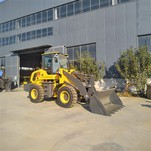


In industrial handling and warehousing operations, gasoline forklifts are widely used because of their strong power and wide adaptability. For suppliers, it is not only necessary to pay attention to the brand and model of the whole machine, but also to know which key components each gasoline forklift consists of, what functions they each undertake, and how they work together. Only by understanding these in depth can we better help customers select, deploy and maintain equipment.
First is the engine, which is the core driving source of the whole vehicle, equivalent to the "heart" of the forklift. Gasoline engines usually start quickly, have low noise, and have stable output, which is very suitable for outdoor places or environments with high power response requirements. Suppliers should pay attention to the engine brand, displacement, fuel consumption performance and its durability under high load.
The second is the gearbox, which connects the engine and the drive wheel and is a key device for controlling vehicle speed and torque. Gasoline forklifts mostly use mechanical speed change or hydraulic torque conversion system, which determines the climbing ability and operation smoothness of the whole vehicle under load. An excellent speed change system can not only improve efficiency, but also extend the life of the engine and transmission components.
The gantry system is responsible for the lifting and stacking of goods. It consists of inner and outer gantry, slide rails, chains and forks. Different structural designs determine the lifting height, load stability and the driver's operating field of view. For suppliers, information such as gantry type (secondary, third-level), lifting height, and fork size are important parameters when recommending solutions to customers.
The role of the hydraulic pump is to convert the power of the engine into hydraulic energy, thereby driving the gantry system to complete the lifting and tilting operations. The stability, sealing performance and response speed of the hydraulic system directly affect the control accuracy and efficiency of the forklift during operation, and it is also one of the key maintenance components that customers pay attention to.
In terms of safety, the role of the braking system is crucial. Gasoline forklifts generally use drum or hydraulic braking systems, and some configurations also include parking brakes to ensure that the forklift still has reliable parking capabilities on slopes or under load. A stable and sensitive braking mechanism is an indispensable safety guarantee for the daily operation of forklifts.
Finally, there is the control panel, which is the "language interface" between the driver and the forklift. The control panel usually integrates elements such as steering wheel, lift control lever, gear selector, instrument indicator, etc. Good layout and ergonomic design can enable the driver to remain efficient and focused during high-intensity operations.