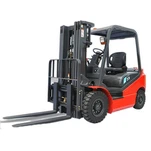


With increasing emphasis on environmental responsibility across industries worldwide, companies are seeking innovative ways to reduce their carbon footprint while maintaining operational efficiency. One effective solution is adopting electric forklifts. These advanced material handling vehicles are more than just an alternative to internal combustion (IC) engines; they are the cornerstone of building a sustainable, future-proof supply chain.
1. Reduced Carbon Emissions
Traditional IC engine forklifts emit significant amounts of carbon dioxide (CO₂), nitrogen oxides (NOₓ), and particulate matter, contributing to air pollution and greenhouse gas accumulation. In contrast, electric forklifts produce zero emissions while in use. By transitioning to electric forklifts, companies can significantly reduce their direct carbon footprint, thereby complying with international environmental standards such as the Paris Agreement and ISO 14001.
2. Improved Energy Efficiency
Electric forklifts are significantly more energy-efficient than their fossil fuel-powered counterparts. While IC engines convert a significant amount of energy into heat, electric motors can convert over 90% of electrical energy into mechanical power. Technologies such as regenerative braking further enhance efficiency by capturing and reusing energy during deceleration. This reduces overall electricity consumption and operating costs.
3. Achieving Green Facility Certification
Using electric forklifts can help warehouses and distribution centers achieve sustainability certifications such as LEED (Leadership in Energy and Environmental Design)**. Electric forklifts operate quietly and with zero emissions, improving indoor air quality and reducing noise pollution, creating a healthier work environment and aligning with ESG (environmental, social, and governance) goals.
4. Integration with Renewable Energy
Electric forklifts can be charged using renewable energy sources such as solar or wind power. This creates a closed-loop sustainability system, enabling material handling operations to be powered entirely by clean energy. For example, a company that invests in on-site solar panels can charge its electric forklift fleet at minimal environmental and financial cost.
5. Strengthening Corporate Social Responsibility (CSR)
Adopting electric forklifts demonstrates a company's commitment to sustainability-a powerful message to environmentally conscious consumers, investors, and partners. Reducing emissions and optimizing energy use through electric material handling equipment can be a key feature in sustainability reports and CSR communications.
6. Longer Lifecycle and Less Waste
High-quality electric forklifts, especially those equipped with **lithium-ion batteries**, typically have longer service lives than internal combustion engine models. They require fewer replacements and generate less waste. Furthermore, lithium-ion batteries are recyclable, further supporting circular economy initiatives.
Conclusion
Electric forklifts are more than just a replacement for traditional equipment; they are a strategic investment in a greener, more efficient supply chain. By eliminating emissions, reducing energy consumption, and supporting the integration of renewable energy, electric forklifts can help businesses achieve sustainability goals while improving operational performance.
Ready to electrify your supply chain? Explore our range of high-performance electric forklifts and learn how they can help you build a cleaner, more sustainable operation.