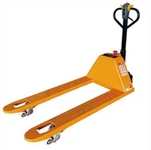


Traditionally, forklifts are considered a tactical tool for within-the-four-walls movement. However, in advanced supply chain strategy, the specifications and capabilities of the material handling fleet must be an integral input during the design phase of new distribution centers (DCs), manufacturing plants, or warehouse retrofits. Ignoring this integration leads to suboptimal layouts, persistent bottlenecks, and a failure to achieve designed throughput, rendering millions in capital investment inefficient.
The Consequence of Siloed Planning: An architecture firm designs a beautiful, space-optimized facility. A separate team then purchases a standard fleet of forklifts. Often, critical incompatibilities emerge: aisle widths are slightly too narrow for the chosen trucks to maneuver efficiently; column spacing creates dead zones; dock heights are mismatched with truck underclearance; or charging infrastructure is an afterthought, placed in inefficient locations. The result is a facility that operates at 70-80% of its theoretical capacity.
Key Integration Points in Network Design:
Facility Layout & Racking Design: The choice between counterbalance, reach, and VNA trucks (see Article 11) must drive the racking layout and aisle width specifications, not the other way around. A simulation modeling different truck types and their travel paths is essential to validate design throughput.
Throughput Modeling & Fleet Sizing: Using historical or projected order profiles, designers must simulate peak activity periods to determine not just the number of forklifts, but the mix (pallet movers, order pickers, etc.). This prevents both over-investment and crippling under-capacity.
Infrastructure for Sustainability: Designing for an electric fleet requires integrating sufficient electrical capacity, strategically located charging stations (opportunity charging bays near high-activity zones), and potentially battery swap rooms if using lead-acid. For Li-ion, climate-controlled charging areas can prolong battery life.
Technology Conduits: The building design must include the data infrastructure (Wi-Fi coverage, potential guidance wire conduits for VNA) to support fleet telematics, WMS integration, and future automation.
Dock & Yard Interface: The fleet strategy must include the equipment for moving goods from the dock to the staging area (e.g., pallet transporters) and within the yard (e.g., terminal tractors). The interface between these zones is a common bottleneck.
The Role of the Forklift Manufacturer as a Design Consultant: Leading manufacturers possess the simulation tools, application engineering expertise, and real-world data from similar facilities to act as crucial consultants during the design phase. They can answer critical questions: What is the optimal travel path from receiving to bulk storage? How many trucks are needed to support a target of 200 line items per hour? What is the electrical load for a 50-truck Li-ion fleet?
Are you planning a new facility or major retrofit? Is your material handling partner at the design table?
We are determined to become a leader in logistics solutions. This means we engage with clients at the strategic and design level. Our Logistics Solution Engineering Team works alongside architects, consultants, and internal project teams to ensure the material handling fleet and operational workflow are engineered into the facility's DNA from day one. We provide simulation, layout analysis, and fleet specification to turn blueprints into productive, fluid operations.
Design productivity into your foundation. Engage our solution engineering team early in your next facility project.
Tel: +86-571-86960886 | Email: info@nuoshington.com