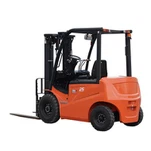


The buzz around full autonomy in warehouses is pervasive. While the vision of a "lights-out" warehouse remains largely futuristic for complex operations, Automated Guided Vehicles (AGVs) and Automated Forklifts are delivering tangible, high-ROI solutions for specific, repetitive material movement tasks today. Implementing automation requires a pragmatic, phased roadmap-not a leap of faith-focusing on augmenting human labor, not replacing it outright.
Defining the Automation Spectrum:
Automated Guided Carts (AGCs): Simple, unit-load movers following magnetic tape or painted lines. Ideal for point-to-point transport of uniform loads.
Forklift AGVs (Automated Forklifts): These are traditional forklifts equipped with navigation systems (LiDAR, cameras, natural feature mapping) and safety scanners to perform automated pallet put-away/retrieval, horizontal transport, and even trailer loading/unloading in structured environments.
Autonomous Mobile Robots (AMRs): More dynamic than AGVs, they use sophisticated mapping to navigate freely around obstacles and people, often used for goods-to-person order picking.
The Ideal Use Case for Automation (The "Low-Hanging Fruit"):
Automation thrives on repetition and predictability. Prime initial applications include:
Horizontal Transport Over Long Distances: Moving pallets from production lines to a designated staging or storage area.
High-Density, Repetitive Put-Away/Retrieval: In a VNA racking system for uniform pallets, where the travel path is fixed and the task is repetitive.
Trailer Loading/Unloading: Automated forklifts can be programmed to unload inbound pallets from a trailer onto a conveyor or staging lane, a physically demanding and sometimes unsafe task for humans.
Replenishment Missions: Moving pallets from reserve storage to forward picking locations based on WMS triggers.
The Implementation Roadmap:
Process Audit & Task Identification: The first step is not buying robots; it's meticulously analyzing your current material flow to identify the most repetitive, predictable, and physically taxing tasks. These are the automation candidates.
Environmental Readiness: Automation requires a higher degree of process and environmental discipline. This includes standardized pallets, consistent load weights, well-maintained and clear travel paths, and robust WMS data.
Phased Piloting: Start with a single process or a small fleet of 2-3 units. This allows you to validate the ROI, work out integration kinks with your WMS, and acclimate your workforce to collaborating with robots.
Hybrid Human-Robot Workforce Design: The goal is collaborative automation. Humans excel at complex decision-making, dexterous handling, and problem-solving. Robots excel at repetitive, precise movement. Design workflows where robots do the "mileage," and humans do the "value-add" tasks.
Total Cost of Ownership (TCO) Analysis: Justify the investment based on labor redeployment (not just reduction), reduced product damage, 24/7 operation potential, and improved throughput predictability.
The Critical Role of the Forklift Manufacturer in Automation: A true partner should offer both manual and automated versions of their platforms. This ensures consistency in parts, service, and load handling mechanics. They should provide the navigation technology, safety systems, and, crucially, the integration middleware to connect the automated fleet to your WMS/ERP.
Is your operation ready to explore pragmatic, phased automation?
As a high-tech manufacturer following the trend of intelligence, we are investing in scalable automation solutions. Our platform-based approach allows certain models in our range to be specified with our nuoAuto kit, providing a clear migration path from manual to semi- or fully-automated operation for specific tasks. We help you identify the right starting point, pilot effectively, and build a realistic business case for automation.
Start your automation journey with a clear roadmap. Contact our automation solutions group for a process audit and feasibility study.
Tel: +86-571-86960886 | Email: info@nuoshington.com