

Forklifts are a staple in many industrial settings, warehouses, and construction sites. These powerful machines are designed to lift and move heavy loads with relative ease, often in confined spaces where traditional vehicles would be impractical. The question of whether forklifts are considered vehicles is one that touches upon classification, usage, and regulatory aspects. This article aims to explore the nature of forklifts, their similarities to and differences from traditional vehicles, and the implications of their classification.
Definition and Purpose of Forklifts
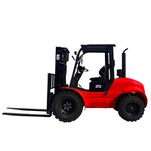
A forklift, also known as a lift truck, fork truck, or forklift truck, is a powered industrial truck used to lift and transport materials over short distances. Forklifts are equipped with pronged devices called "forks" that slide under a load for lifting and are raised and lowered by hydraulic systems. These trucks are typically used for moving materials stored in pallets, crates, or other containers.
Classification of Forklifts
Forklifts are classified under a category of industrial machinery rather than traditional road-going vehicles. They are not usually subject to the same regulations as cars, trucks, and motorcycles that operate on public roads. However, this does not mean that forklifts are exempt from all regulations. On the contrary, they are subject to strict safety regulations within their operational environments.
Similarities to Traditional Vehicles
Despite their industrial classification, forklifts share several similarities with traditional vehicles:
1. Mobility: Forklifts are self-propelled, mobile pieces of equipment that can move around a facility much like a vehicle moves on a road.
2. Control Systems: Like vehicles, forklifts are equipped with a steering mechanism, pedals or controls for operation, and often a driver's seat.
3. Engine or Power Source: Many forklifts are powered by internal combustion engines or electric batteries, similar to many vehicles.
4. Operator: They require trained operators to safely control the equipment, similar to how a driver operates a vehicle.
Differences from Traditional Vehicles
The key differences lie in their intended use, design, and the environments in which they operate:
1. Design: Forklifts are designed with a very low center of gravity and a heavy counterweight at the rear to compensate for the weight of the load in front. This design is vastly different from traditional vehicles that prioritize comfort, aerodynamics, and passenger safety.
2. Operation: Forklifts are typically operated in areas where they do not have to interact with other vehicles or pedestrians, such as warehouses or loading docks. They are not designed to handle high-speed driving or to be used on public roads.
3. Safety Features: Forklifts often have unique safety features like warning alarms, rear-view mirrors, and sometimes overhead guards to protect the operator from falling objects.
4. Legal Status: In many jurisdictions, forklifts do not require a traditional driver's license to operate, but they do require special certification and training to ensure the operator understands the unique risks associated with their use.
Regulatory Implications
The classification of forklifts as industrial equipment rather than vehicles means they are typically regulated by workplace safety laws and standards. Employers must ensure that forklifts are properly maintained, operators are adequately trained, and that safety protocols are in place to protect both operators and those working in the vicinity of the forklifts.
Conclusion
In conclusion, while forklifts are not traditionally considered vehicles in the sense of being able to drive on public roads, they share enough similarities with vehicles to warrant careful consideration of their operation, training, and safety. They are an integral part of material handling operations and their unique design and purpose make them an essential piece of equipment in many industries. Understanding their classification and adhering to the relevant regulations are critical for ensuring safe and efficient operations.

are forklifts considered vehicles
Jan 10, 2025


Send Inquiry
Categories
Contact Us
- Tel: +86-571-86960886
- Email: info@nuoshington.com
- Add: No. 100, No. 18 Street, Hangzhou Economic And Technological Development Zone, Zhejiang Province, China